
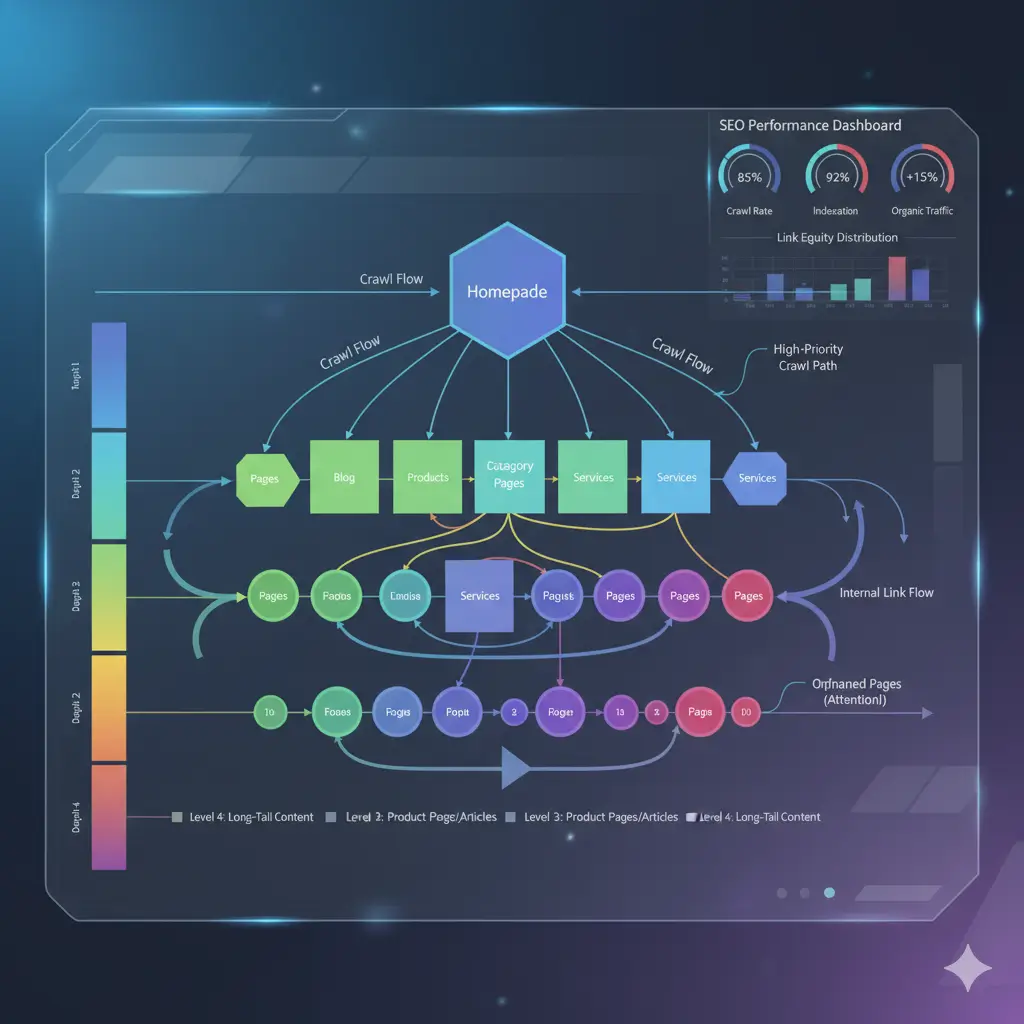
Why Internal Linking Depth Matters
Internal linking depth is one of the most overlooked structural signals in SEO. When important pages sit too deep in the hierarchy, search engines crawl them less often, assign lower priority, and delay indexing. A clean, balanced architecture helps ensure that authority flows evenly and that crucial URLs stay easily discoverable.
Most sites naturally accumulate layers over time. New categories, outdated navigation, orphaned content, and buried subpages create uneven depth levels. This slowly weakens crawl distribution, especially on large or fast-growing websites.
How SEOsets Identifies Link Depth and Crawl Gaps
SEOsets provides a detailed internal depth map that shows how many clicks separate each page from the homepage. Instead of relying on guesswork, the platform presents a clear hierarchy that highlights:
- URLs buried too deep
- Groups of pages receiving low crawl attention
- Sections with uneven link spacing
- Paths that require restructuring
Once the crawl is complete, you can review which pages are drifting beyond optimal depth levels. The tool also shows weak clusters where internal pathways are thin or fragmented. This gives you a complete picture of how search engines experience your site’s structure.
Strengthening Crawl Distribution Through Better Internal Linking
After identifying the issues, the next step is improving how crawl equity moves across the site. Bringing important pages closer to the top levels immediately increases their crawl frequency and signals stronger relevance.
Adjustments often include adding contextual internal links, updating navigation items, improving hub pages, and reinforcing isolated sections. If some parts of the site have too many interlinks while others barely have any, a redistribution helps balance visibility.
Small actions like refreshing outdated menus or inserting links in high-authority articles can dramatically improve crawl flow. With depth insights, these changes become deliberate instead of random.
Tracking Improvements with Ongoing Monitoring
Once the structure is optimized, SEOsets allows you to monitor how crawlers respond to the new layout. Depth scores adjust, crawl paths shift, and previously neglected pages often start receiving more attention.
If any outliers remain buried, the platform flags them again. This makes internal linking a continuous improvement system rather than a one-time fix. As you grow, the monitoring ensures new pages don’t fall into deep layers or become structurally isolated.
Start improving your internal linking depth and optimizing crawl distribution with SEOsets.
FAQs
What is internal linking depth?
It refers to the number of clicks required to reach a specific page from the homepage. Lower depth generally improves crawlability and ranking potential.
How does deep content affect rankings?
Pages buried deep receive less crawl attention and weaker authority flow, which limits indexing speed and ranking strength.
How often should depth analysis be done?
Monthly reviews are ideal for active sites. Large websites or frequently updated platforms may require even more frequent checks.
Can internal links alone improve crawl distribution?
Yes. Internal links guide crawlers, influence authority flow, and can significantly improve distribution without needing additional content.

