
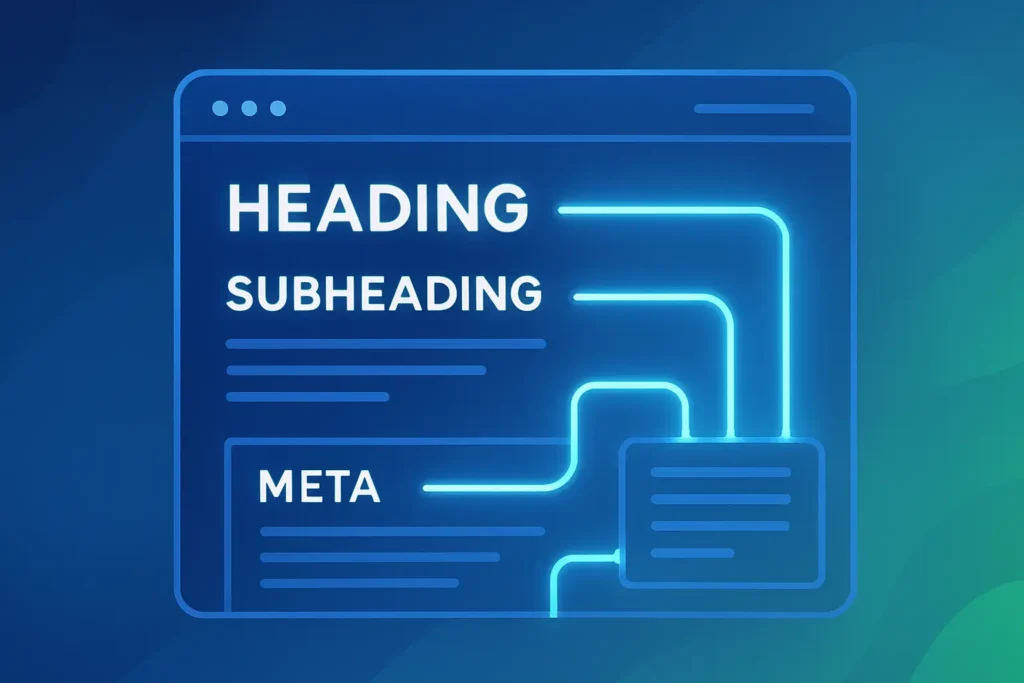
In the competitive world of digital marketing, search engine optimization (SEO) has become more crucial than ever. Websites that rank higher in search results attract more traffic, increase engagement, and ultimately drive conversions. While many factors contribute to SEO success, optimizing meta tags, headings, and content structure is fundamental. With the help of advanced tools like SEOsets, businesses can gain actionable insights to refine their on-page SEO efficiently.
The Importance of Meta Tags in SEO
Meta tags are snippets of text that describe a page’s content but don’t appear on the page itself. They serve as a guide for search engines to understand what your page is about. The two most critical meta tags are the meta title and meta description.
- Meta Title: This is the clickable headline that appears in search results. A well-optimized title includes your target keyword, remains within 50–60 characters, and communicates the essence of your page. SEOsets allows you to analyze competitors’ meta titles, suggesting ways to make your titles more compelling and keyword-rich.
- Meta Description: This brief summary appears under the meta title in search listings. It should be 150–160 characters, providing a concise overview of the page content. Using SEOsets, you can identify meta descriptions that perform well in your niche, enabling you to craft descriptions that increase click-through rates.
By continuously monitoring meta tag performance, SEOsets ensures that your website’s metadata aligns with search intent, improving both visibility and user engagement.
Structuring Headings for Maximum SEO Impact
Headings play a crucial role in both user experience and SEO. They organize content into digestible sections and help search engines understand the hierarchy of your information.
- H1 Tag: Every page should have a single H1 tag that accurately reflects the main topic. SEOsets insights help ensure your H1 is unique, relevant, and contains primary keywords.
- H2 and H3 Tags: Subheadings break down content into manageable sections. Using keyword-rich H2s and H3s improves readability and contextual relevance. SEOsets allows you to analyze which subheadings are attracting traffic in your industry, helping you structure content more effectively.
A well-planned heading structure not only boosts SEO but also enhances user experience, keeping visitors engaged longer.
Optimizing Content Structure with SEOsets
Content structure is more than headings—it involves organizing information logically, using internal links, and providing clear navigation. SEOsets provides insights into how your content is performing and identifies areas for improvement.
Internal Linking Strategy
Internal links connect related pages within your site, distributing link equity and improving crawlability. SEOsets can analyze your internal linking patterns, highlighting orphan pages and suggesting where new links could improve SEO. Proper internal linking ensures that both users and search engines can navigate your site efficiently.
Keyword Placement and Density
Strategic keyword placement is critical for SEO. SEOsets tracks keyword performance across your pages, helping you maintain optimal keyword density without overstuffing. Insights include which keywords drive traffic, which need more emphasis, and how competitors are utilizing them. This data allows you to structure your content in a way that balances readability with SEO effectiveness.
Readability and User Engagement
Google rewards content that users find valuable and engaging. SEOsets evaluates content readability, suggesting adjustments to sentence length, paragraph structure, and language complexity. Clear, well-structured content keeps visitors on your site longer, reducing bounce rates and signaling quality to search engines.
Leveraging SEOsets Insights for Continuous Improvement
SEO is not a one-time effort. Continuous monitoring and optimization are key to maintaining high rankings. SEOsets offers a comprehensive analytics dashboard where you can:
- Track changes in meta tag performance.
- Monitor heading effectiveness and content engagement.
- Identify underperforming pages or sections.
- Benchmark your site against competitors.
By regularly reviewing these insights, you can make data-driven decisions that refine your content strategy, ensuring consistent improvements in SEO performance.
Practical Steps to Implement SEOsets Insights
- Audit Your Current Meta Tags: Use SEOsets to analyze your existing meta titles and descriptions. Identify underperforming pages and optimize them with relevant keywords and compelling language.
- Revise Headings: Review your H1, H2, and H3 tags for clarity, relevance, and keyword inclusion. SEOsets can show you which headings resonate most with your audience and which need adjustment.
- Enhance Content Structure: Organize content logically with clear subheadings, bullet points, and internal links. SEOsets provides suggestions for linking opportunities and content hierarchy improvements.
- Monitor Keyword Performance: Track how targeted keywords are performing on different pages. Adjust content placement and density based on SEOsets insights.
- Evaluate Engagement Metrics: Review metrics like bounce rate, time on page, and click-through rates. Identify which pages are engaging visitors and which require restructuring or additional content.
Conclusion
Optimizing meta tags, headings, and content structure is essential for achieving better search engine rankings and improving user experience. With the actionable insights provided by SEOsets, businesses can make data-driven decisions, ensuring that every element of on-page SEO is performing at its best. From refining meta titles to structuring content logically and strategically placing keywords, SEOsets simplifies the optimization process, making it easier to maintain and improve your site’s visibility.
By leveraging these insights effectively, you can not only enhance your website’s SEO performance but also provide a better experience for your visitors, ultimately driving more engagement and conversions.
For businesses looking to take their SEO to the next level, explore SEOsets and see how its tools can transform your content strategy.
FAQs
Q1: What are meta tags, and why are they important?
Meta tags are snippets of information that describe a webpage’s content to search engines. They are crucial because they influence search engine rankings and click-through rates.
Q2: How do headings affect SEO?
Headings (H1, H2, H3) help structure content for both users and search engines. They improve readability, highlight key topics, and provide contextual relevance for keywords.
Q3: Can SEOsets suggest keyword improvements?
Yes. SEOsets analyzes keyword performance across your website and competitors, providing actionable suggestions for placement, density, and optimization.
Q4: How does internal linking help SEO?
Internal links connect related pages within your site, improving crawlability, distributing link equity, and enhancing user navigation.
Q5: How often should I optimize my website content?
SEO is an ongoing process. Regular audits, performance tracking, and updates based on insights ensure continuous improvement and better search engine rankings.

